


In the third and final post in this series from Olha Madylus, she shares her top strategies and advice for teachers preparing adults for Cambridge exams.
Teaching adult learners can be very challenging. Although they are often very motivated and can bring a lot of life experience to lessons, they are usually very busy with full-time jobs and many other commitments that mean time for study is limited.
An effective strategy in this case (as with teenagers, who have all their other school subjects to contend with) is to create the right circumstances for them to personalise the learning they do in their own time, so it is targeted at areas they need to improve on. This means you have to:
- work together with them to identify their strengths and areas that need improving in order to succeed in exams;
- introduce them to tools, sites and materials that they can access easily, ideally in bite-size chunks that they can do in a ten-minute coffee break or on the bus on their way to work;
- monitor what they are doing, check on their progress and advise where necessary.
This is quite a radical approach compared to traditional education where all students do the same homework. It’s not about comparing a student with their classmates, but helping every student reach their potential. Fear not, this does not mean planning separate schemes of work for each individual student, although you will need to spend a bit of time in early lessons introducing students to the resources they can choose themselves and utilise, and checking they are targeting areas that need improvement.
Traditional resources
These can include grammar reference books, a library of readers, dictionaries etc. Some students may enjoy reading a (graded) novel on the bus.
Apps
Many of us have smart phones and students can access lots of free (or very inexpensive) apps on them, like English Grammar in Use (Android and Apple). So, if you notice that one student is having problems using e.g. the present perfect tense, you can advise them to do the tasks in the appropriate unit.

And there are also excellent tools like ‘Write and Improve’ and ‘Test and Train’ (see below), in which students can practise exam writing tasks and get immediate feedback. So, the marking is done for us and students get instant feedback.
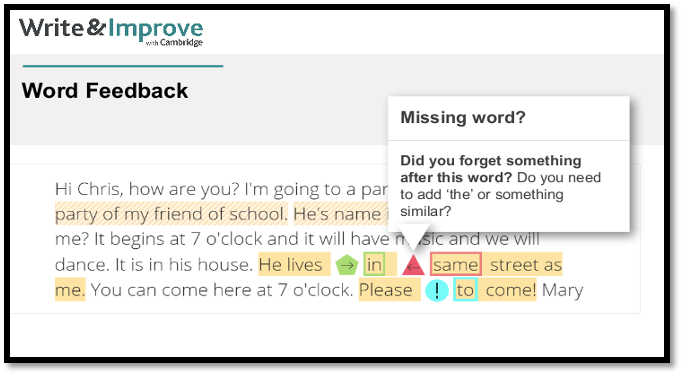
For more exam specific bite-size tasks, on the Assessment website, there are over 170 short (5-10 minute) tasks to practise exam skills at every level.

And don’t forget to direct students to online English language newspapers, magazines and podcasts.
Tapping into previous language learning
Also, do remember that a lot of the time, adult learners of English are coming back to English and although they think they have forgotten a lot, there is a lot of language knowledge, particularly passive knowledge, that can be reactivated. So, an inductive approach to learning works well. Rather than presenting language as if it is new to them, allow them to recall what they know. This not only saves time in class, but builds their confidence and motivates them to be less passive in their learning.
e.g. What’s the difference in meaning between these two sentences?
I went to school at 7 am.
I used to go to school at 7 am.
Maximise English use
Another way to ensure that language and exam skills’ practice is maximised in class is to use as much group and pair work as possible. For example, while doing a Use of English practice test, ask students to work together, share ideas and previous knowledge and very importantly get extra listening and speaking practice (as you encourage them to use English at these times).
Even at lower levels like A2 and B1, support using English at all opportunities: chatting as they come in, sharing ideas and experiences, playing language games (we are never too old for fun in the classroom) and role plays. Make it the norm.
Students can also be encouraged to create a WhatsApp or similar digital social group to ‘chat’ in English about their lessons, share useful links, ask language questions when they get stuck with homework and practise writing and reading in English. You can be part of the group, monitoring it and making contributions but it is their group and you don’t need to spend too much effort on it. It can also be a useful source of ideas for you on which areas they need extra work on in class.
Tutorials
Another strategy is to have regular one-to-one tutorials with each student. These do not have to be on top of lessons, you can take a student to one side, while the rest of the class is working in groups on a task. In these tutorials, you can:
- ask about what they have been doing as homework;
- check that they have no outstanding questions about language or the exam;
- suggest other tools they can use or language to review.
If you find yourself teaching online these one-to-one tutorials can really help maintain clear communication and ensure that students are getting effective guidance.
If you missed out on my previous 2 blogs in the series, you can catch up with my activities for exam preparation specifically for young learners and teens. You can also find more teaching ideas on my blog.